Stepping off the plane into Okinawa’s humid summer air, I knew immediately this trip would be unlike any other. I had traveled with my son and over 100 karate practitioners to honor the memory of the art’s founder on the first anniversary of his passing. While much of our time was devoted to memorial events, we were allotted two free days to explore. What we found was equal parts beautiful, challenging, and unforgettable. Here’s what stood out.
Getting There
Our route took us from Grand Rapids to Minneapolis, across the Pacific to Tokyo, and finally down to Okinawa.
We splurged on Delta Premium Select for the long 12.5-hour flight, and I don’t regret it. The Airbus A350 was comfortable, the staff was friendly, and the food was far better than I expected. At $3,217 per person, it wasn’t cheap, but after experiencing that long of a flight in comfort, I can’t imagine doing it in economy, it would have been a miserable experience.
For the shorter connections, we flew Delta Comfort+ domestically and ANA economy within Japan. ANA was efficient and polished, I’d happily fly them again.
Where We Stayed
We based ourselves at the Mercure Okinawa Naha, right next to a monorail station. At about $720 for the week for two, including breakfast, it was a great deal.
Rooms were tiny but spotless and well organized. The breakfast buffet mixed traditional Japanese fare with their take on American favorites, syrupless pancakes and all. With clean rooms, a convenient location, and a staff willing to accommodate our group of over 100, I’d stay again without hesitation.
Sights Worth Seeing
Even with only two free days, we managed to see quite a bit:
- Shuri Castle (UNESCO World Heritage Site)
Destroyed by fire in 2019, the castle is being carefully reconstructed inside a massive temporary structure. Even unfinished, it was fascinating. Scheduled for completion in 2026, it’s worth visiting now and again when fully restored. - Shikinaen Royal Garden (another UNESCO Site)
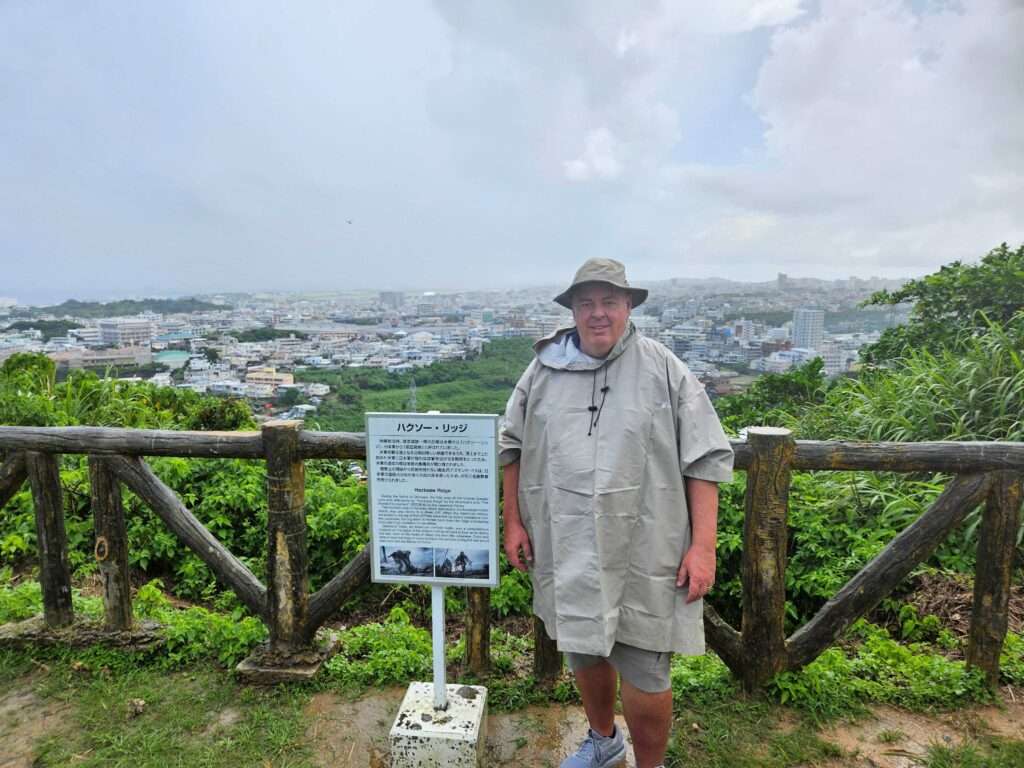
More estate than garden, with traditional Japanese architecture and landscaped grounds. Interesting but, for me, a “see once” stop. - Hacksaw Ridge
A World War II site made famous by the Mel Gibson film of the same name. Heavy rain and endless stairs made it a challenge, but I’d like to return on a clear day. - Itoman Peace Park
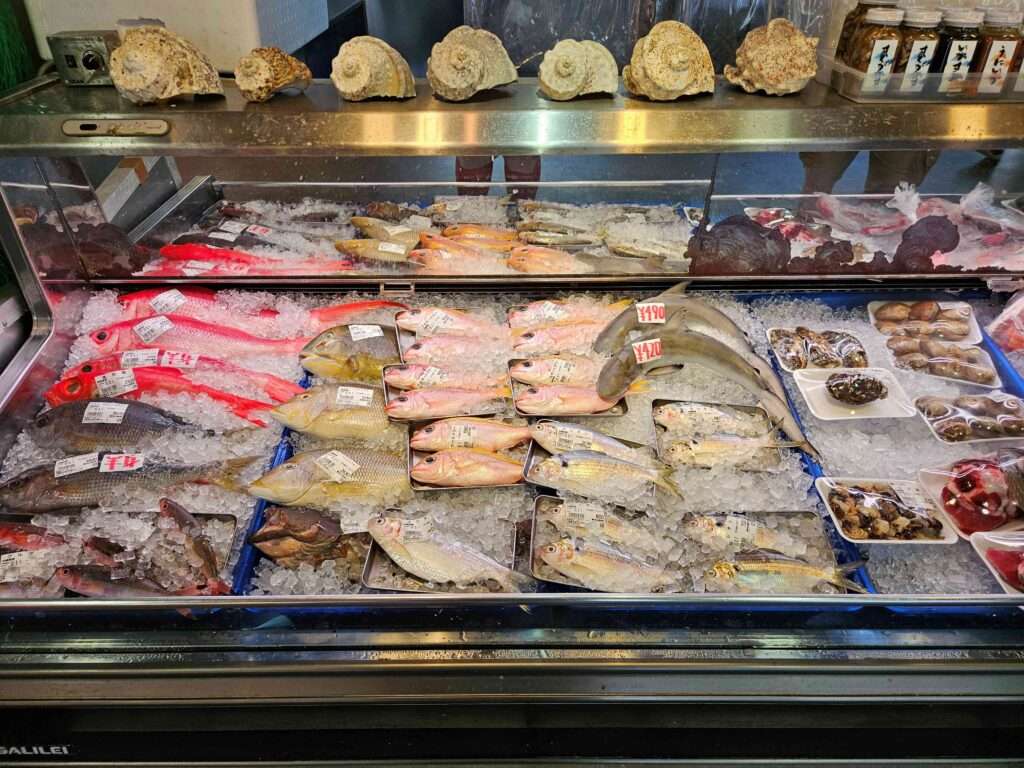
Profound and moving. Walls inscribed with names of all who died in the Battle of Okinawa, soldiers and civilians alike, stretch far beyond what you expect. We had only an hour, but three hours would have been a better plan. A must-see. - Itoman Fish Market
Busy and touristy, but the best tuna sashimi of my life made it worthwhile.
- Nishihara Beach
We joined a community cookout here. A lively beach with a nearby water park, ideal for families. Bonus: I can now add “grilled for a crowd internationally” to my resume. - Naha Pottery District
Dozens of shops line a street dedicated to Okinawan pottery. Watching artisans at work was a highlight, and it’s a great spot for gifts and souvenirs. - Kokusaidori
Okinawa’s main tourist street. Wall-to-wall souvenir shops, most selling the same things. Worth a quick look, but definitely a tourist trap. - Heiwadori
A covered shopping street branching off Kokusaidori, but with more variety and character. We even stumbled into a liquor shop making its own whisky and awamori. They offered free tastings and we ended up buying a bottle.
Eating in Okinawa
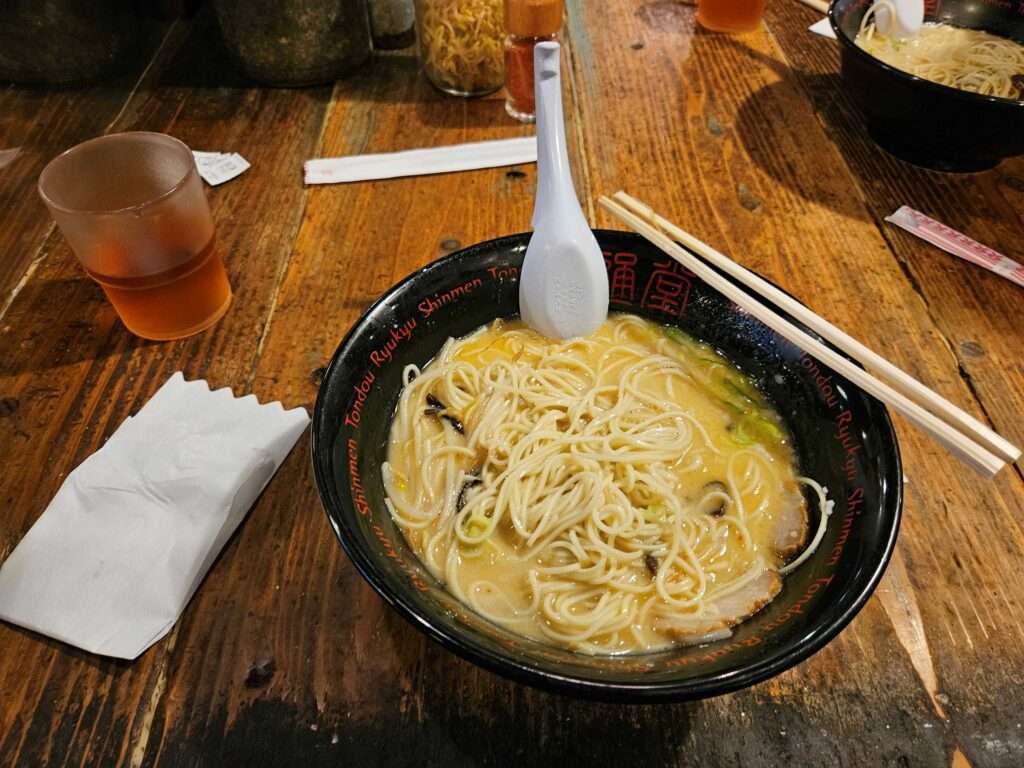
Finding restaurants wasn’t easy; most had only kanji signs. We relied on word of mouth and were never disappointed (except for pizza at Shakey’s, don’t do it).
If you love ramen or soba, Okinawa will set a new standard. If you don’t like Asian food, though, you’ll struggle. For the less adventurous, there’s A&W, McDonald’s, and KFC.
Weather Realities
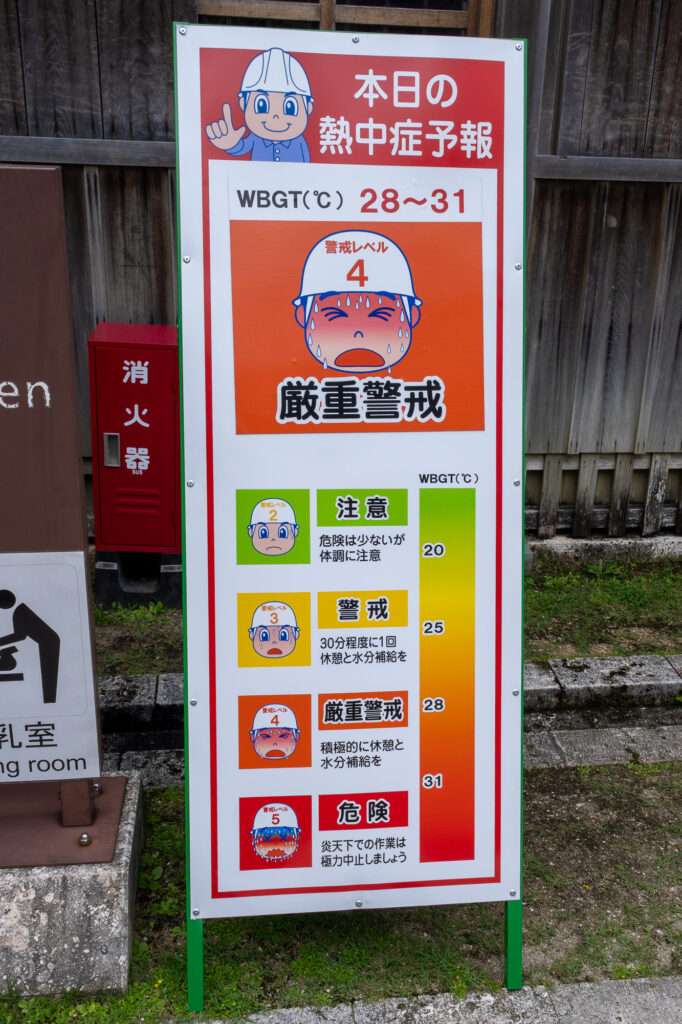
Here’s the part I won’t sugarcoat: visiting Okinawa in late July and August is brutal.
Daily highs never dropped below 82°F, with dew points in the same range. Step outside and you’re drenched in sweat within minutes, or soaked by torrential rain. You were perpetually wet, there was no escaping it. I averaged three showers a day. Add in typhoons and monsoon season, and it was oppressive.
Air conditioning seemed like it was rarely set below 78°F, except in our hotel rooms, which we managed to cool to 68°F. If you’re planning a trip, I strongly suggest avoiding July and August.
The People and Culture
Despite the language barrier, Okinawans were consistently kind and respectful. Google Translate was essential, but politeness bridged the gap.
A few cultural notes stood out:
- No trash cans. Carry your own bag. Strangely enough, the streets are spotless.
- Strict but subtle social rules. Locals give foreigners grace, but I tried hard not to be the stereotypical American.
- Safety. No panhandlers, no sketchy areas. I felt safe everywhere, even late at night. I honestly believe if I had left my camera on a bench, it would still be there when I returned.
Naha itself isn’t a particularly pretty city. Unpainted concrete buildings, earthquake readiness, and endless wires overhead give it a utilitarian look. Still, the culture is the unique experience here.
Transportation was easy within Naha thanks to the monorail and taxis. Outside the city, not so much. A trip to the world-renowned Churaumi aquarium, for example, would have required a four-hour round trip bus ride or a $300 day-long taxi rental. If you want to explore beyond the city, get an international driver’s license and rent a car.
Final Thoughts
For me, this trip was about more than the sights—it was about spending time with my son before he heads to college. Okinawa tested us with its climate, challenged us with its food and culture, but rewarded us with unforgettable experiences.
Would I go back? Probably not. It was a once-in-a-lifetime trip, and I’m glad I went. There are too many other places still waiting to be explored.
👉 If you’ve been to Okinawa, what was your favorite part? And if not, would you put it on your travel list? Let me know in the comments.